
October 12, 2026 · Emre Kurt, Lawyer
How to Get the Greece Golden Visa in 2026: 10 Steps
How to get the Greece Golden Visa: 10 steps from choosing the route and property to power of attorney, AFM, title deed, application and biometrics — with time and cost.
The short answer to how you get the Greece Golden Visa: first you buy an eligible property, then you apply for residence. You cannot apply before the sale is completed. The process has 10 steps — choosing the route, choosing the property, power of attorney, tax number, reservation, payment, title deed, application, biometric appointment and card delivery. This guide walks through each step in order, with its cost and timing.
Fees and timings summarise 2026 practice; official amounts and waiting times can change.
The Process at a Glance: 10 Steps and Estimated Timings
| # | Step | What happens | Estimated time |
|---|---|---|---|
| 1 | Route and budget | Choose the €250K / €400K / €800K threshold and region | Immediately |
| 2 | Property selection | Eligibility and legal check (due diligence) | 1–4 weeks |
| 3 | Lawyer and power of attorney | Power of attorney via notary or apostille | 1–2 weeks |
| 4 | Tax number (AFM) and bank | Greek tax number, bank account | A few days–2 weeks |
| 5 | Reservation agreement | Deposit of about 10% of the price | 1–3 days |
| 6 | Payment and costs | Transfer of the balance and purchase costs | 1–2 weeks |
| 7 | Final contract and title | Notarisation, filing with the land registry | 1–3 weeks |
| 8 | Application | File after the Land Registry Pending Registration certificate | Certificate in 2–5 working days |
| 9 | Application certificate and biometrics | Fingerprints in Athens (one trip) | Processing 2–7 working days |
| 10 | Card delivery | Plastic residence card | ~6–8 months |
Step 1: Choose Your Route and Budget
The investment amount depends on where the property is (Law 5100/2024):
- €800,000 (Zone A): Attica, the Thessaloniki Regional Unit, Mykonos, Santorini and islands with more than 3,100 residents.
- €400,000 (Zone B): the rest of the mainland and islands with 3,100 residents or fewer.
- €250,000 (Zone C): commercial-to-residential conversion or restoration of a listed building; valid in every region.
In every category the investment must be in a single property; the minimum of 120 m² of main living space applies only to Zones A and B — there is no 120 m² rule in Zone C. For how many m² you can buy by area, see our home prices guide; to compare routes, see €400K or €800K.
Step 2: Choose the Property and Check It Legally
Choosing the property is the most critical step, because the wrong property leads to refusal or to problems later. Check the threshold and region, main living space, title and mortgages, zoning and building permit, energy certificate, any short-term rental restriction and, for Zone C, the conversion permits. This check must be done by a lawyer independent of the seller or agent. For the full checklist, see our due diligence guide.
Step 3: Hire a Lawyer and Prepare a Power of Attorney
Your lawyer needs to be able to represent you legally for the purchase and the residence application; the tool for this is the power of attorney, which is required for both. There are three ways to give it:
| Method | How it works | Time |
|---|---|---|
| Notary in Greece | Signed before any Greek notary with a sworn translator | About 1 hour |
| Abroad, Apostille country | An English power of attorney is sent; a local notary certifies it, then it is apostilled | Apostille 1–2 weeks |
| Non-Apostille country | Appointment at a Greek consulate or embassy, or an intermediary notary who can arrange the apostille by post | 1–2 weeks |
If dependants are included, preparing their powers of attorney at the same time, or signing a joint one, saves time. Details on applying remotely are in our power of attorney and AFM guide.
Step 4: Tax Number (AFM) and Bank Account
Once the power of attorney is ready, the lawyer obtains your Greek tax number (AFM). Without it there can be no title transfer, tax payments or banking. A bank account is the practical way to make the purchase payment and later pay annual taxes such as ENFIA. See our guides on the AFM and the bank account.
Step 5: Private Reservation Agreement and Deposit
Once the property is chosen, the lawyers draft a private reservation agreement between seller and buyer. A deposit of about 10% of the agreed price is usually paid. The agreement takes the property off the market for you, but have your lawyer check its terms — especially withdrawal and delay clauses — before signing. For new builds and conversions, the delivery date and a delay penalty must be written into the contract.
Step 6: Payment and Purchase Costs
The balance and the costs are transferred to Greece just before the final instalment. The main items:
| Item | Amount / rate | Note |
|---|---|---|
| Transfer tax | 3.09% of the property value | A rise to 15% for non-EU buyers has been announced; not yet law |
| Land registry | 0.8% | Of the property value |
| Notary | 1.24% | Of the property value |
| Legal fee | ~2.24% | Purchase service |
| Government fee, main applicant | €2,000 | Fixed |
| Adult dependant fee | €150 / person | Fixed |
| Residence card issue | €16 / person | Fixed |
| Health insurance | ~€200 / person | Average; depends on the policy |
Total costs are usually about 8–10% of the property value. For a full calculation, use our total cost guide. If the new tax rate becomes law, a €400K purchase would carry about €48,000 more (15% transfer tax).
Step 7: Final Contract and Title Registration
Your lawyer signs the final sale contract before a notary under the power of attorney. Right after notarisation a copy is sent to the land registry. You do not need to be in Greece at this stage; the power of attorney is what makes the remote process possible.
Step 8: Filing the Golden Visa Application
Within 2–5 working days of the contract being sent to the land registry, the Land Registry Pending Registration certificate is issued and the residence application can be filed. The main applicant only provides a passport and the power of attorney. Family members need passports, powers of attorney and documents proving the relationship (marriage, birth certificates, etc.), apostilled or legalised by a consulate.
- A clear scan of the passport pages showing all travel in the 10–15 days before the application is requested.
- The health insurance policy is uploaded with the application.
- Family covered: the spouse, children under 21 and the parents of both spouses.
For details, see our documents checklist and family members guide.
Step 9: Application Certificate and Biometric Appointment
Within 2–7 working days of processing, the Application Certificate is issued. It shows the application has been received and can be used instead of a visa for a single entry into Greece, with no limit on the length of stay. For anyone without a valid Schengen visa it is the practical way to come to the biometric appointment.
Biometrics is the only step that cannot be done remotely: the main applicant and dependants must go to Athens to give fingerprints. This is usually a 1–2 hour appointment on a weekday morning. See our biometric appointment guide.
Step 10: Receiving the Residence Card and After
After biometrics, issuing the plastic residence cards takes about 6–8 months. Meanwhile, the application certificate lets you stay in Greece legally and travel in and out of Greece; the right to travel to other Schengen countries starts with the residence card (Schengen travel rights). The permit is valid for 5 years and renewable as long as you keep the property. For renewal, see our after-5-years guide.
5 Risks and Warnings Before You Apply
- Short-term rental ban: the property cannot be let Airbnb-style; the sanction is a €50,000 fine and revocation of the permit (details).
- Tax rise risk: a 15% transfer tax for non-EU buyers has been announced, with 1 July 2027 being discussed, but it is not yet law.
- New scrutiny: circular 1/2026 (22 April 2026) increased anti-fraud reporting duties; be ready to document the source of your funds.
- Wrong size or region: a property below the threshold or under 120 m² where required will sink the application.
- Construction delay: for new builds and conversions, tie the delivery date to the contract.
For the most common mistakes, see our mistakes guide; for concrete options, see our project analyses.
Sources: Laws 5100/2024 and 5275/2026, circular 1/2026, law-firm process information.
Let's take the right step toward your Greece Golden Visa together.
From choosing the right project to the application and residency, we are with you end to end.
Get a Free ConsultationFrequently Asked Questions
1. How do you get the Greece Golden Visa — do you apply first or buy the property first?
You buy the property first and then apply. You can only apply once the sale contract has been signed and sent to the land registry and the Land Registry Pending Registration certificate has been issued. The process runs in this order: route and property selection, power of attorney, tax number, reservation agreement with a deposit of about 10%, payment, notarised final contract, application, biometric appointment and card. The application certificate is issued within 2–7 working days, and the card takes about 6–8 months. In other words, you will have the residence card in roughly 8–10 months.
2. Do I have to travel to Greece for the Golden Visa?
No, with one exception. The purchase, tax number, bank and application steps can all be handled remotely through a power of attorney. The biometric appointment cannot: the main applicant and dependants must go to Athens to give fingerprints. This is usually a 1–2 hour appointment on a weekday morning. If you have no valid Schengen visa, the application certificate replaces the visa for a single entry. A few days in Greece may therefore be enough for the whole process, though you may want a separate trip to view properties.
3. What does the Golden Visa cost in total?
Expect costs of roughly 8–10% on top of the investment. Transfer tax is 3.09%, land registry 0.8%, notary 1.24% and legal fees about 2.24%. Government fees are fixed: €2,000 for the main applicant, €150 per adult dependant, €16 per person for the card, plus health insurance of about €200 per person. On a €400,000 purchase the total costs come to roughly €32,000–40,000. If the 15% transfer tax announced for non-EU buyers becomes law, a €400,000 purchase would cost about €48,000 more; check the current status before you buy.
4. Can family members be included in the same application?
Yes. The spouse, children under 21 and the parents of both spouses can be included in the main applicant's file with no additional investment. Each family member needs a passport, a power of attorney and documents proving the relationship, apostilled or legalised by a consulate. Add €150 for each adult dependant, the €16 card fee per person and health insurance. All family members must attend the biometric appointment. Preparing the powers of attorney together and filing jointly shortens the process noticeably.
5. Where do delays usually happen?
Delays mostly arise in three places: preparing apostilles and documents (1–2 weeks), gaps found during the legal check of the property, and the official wait for the biometric appointment and the card (6–8 months). For new builds and conversions the construction timetable is another real risk: the purchase is what supports the application, but a delivery delay can still affect your plans. To reduce delays, prepare complete documents from the start, have the whole family's powers of attorney done together and have the property checked by a lawyer independent of the seller.
Note: This article is for general information only and does not constitute legal or financial advice. As current regulations may change frequently, we recommend consulting a licensed immigration advisor or our law office before applying.
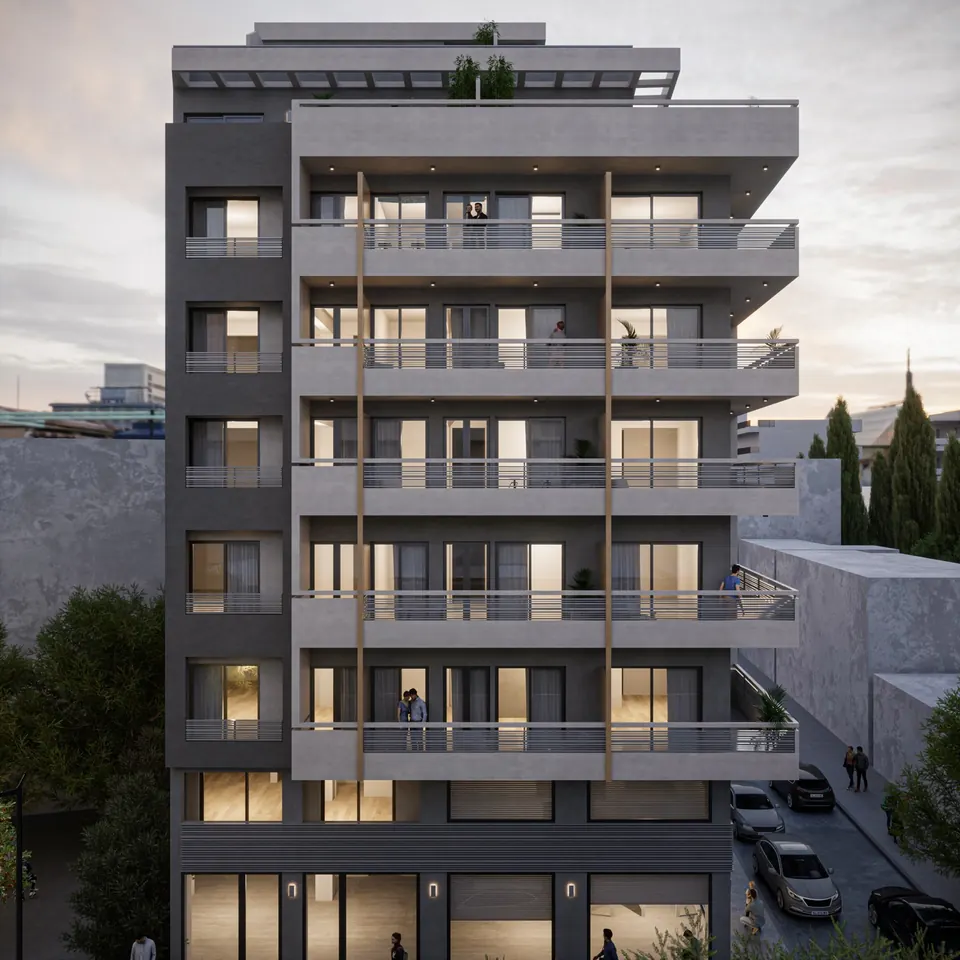 DELIVERY MAR 2027
Larissa Station · AthensGA-02
Larissa Station Residences
A €250,000 Golden Visa conversion beside Larissa Station in central Athens: 21 furnished residences with a gym and shared lounge.
- Beds
- Studio – 3 bed
- Energy Class
- —
- Delivery
- 2027
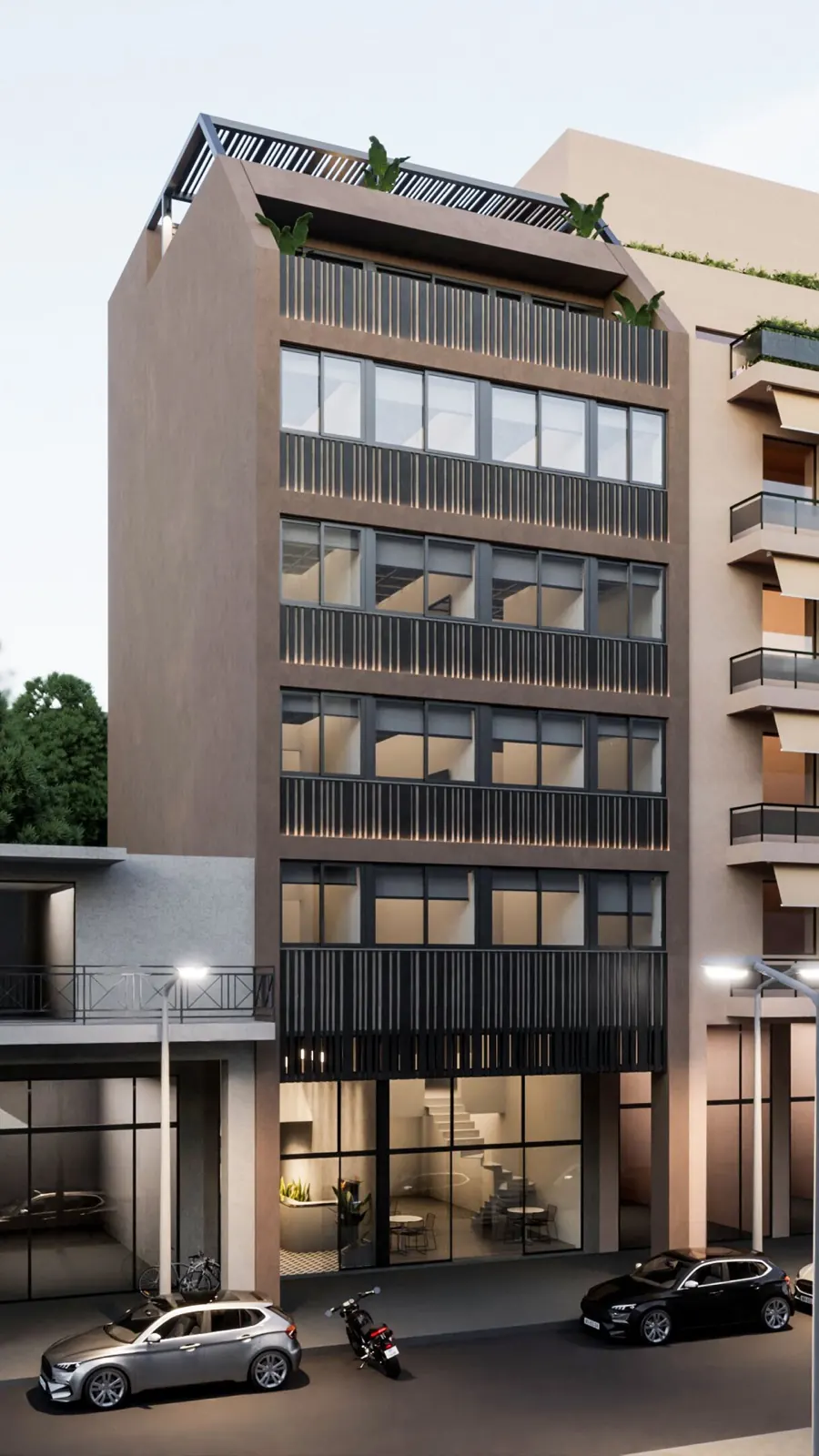 READY TO MOVE IN
Piraeus · AthensGA-04
Piraeus Furnished Apartments
A €250,000 Golden Visa conversion in the port city of Piraeus: ready, fully furnished apartments in a building with smart locks, a reception and a gym. Apartments bought for the Golden Visa can only be let long-term.
- Beds
- 1–2 bed
- Energy Class
- —
- Delivery
- Ready
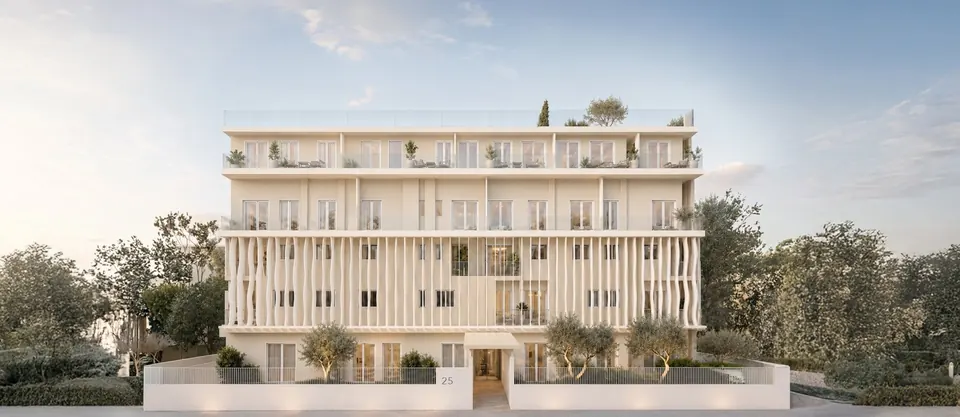
Agios Ioannis Rentis · PiraeusGA-40
Piraeus Garden Residences
A 72-apartment residential complex in Piraeus created by converting a commercial building: a courtyard with a reflecting pool, private garden, outdoor gym and a rooftop terrace with Acropolis and coastline views. 42–81 m², delivered furnished, eligible for the €250,000 Golden Visa.
- Beds
- 1–3 bed
- Energy Class
- —
- Delivery
- 2027