
October 30, 2026 · Emre Kurt, Lawyer
Greek Citizenship Through the Golden Visa: 7-Year Path (2026)
The Golden Visa does not grant citizenship directly. The path to a Greek passport: 7 years of real residence, long-term status, B1 Greek and the PEGP exam.
"If I get a Golden Visa, will I get a Greek passport after 7 years?" It is one of the questions investors ask most often. The short answer: possibly, but not automatically. The Golden Visa is a residence permit. Citizenship requires a separate application, separate conditions and, above all, really living in Greece.
This article walks step by step through the path from the Golden Visa to Greek citizenship, with a realistic timeline.
Golden Visa holders can apply for citizenship after 7 years of continuous, lawful residence in Greece. But "residence" means actually living there, not on paper; a holder who visits Greece a few times a year does not meet the requirement. At the time of application you will usually need long-term resident status, B1-level Greek and a pass in the PEGP exam. After applying, the decision can take 2–4 years in practice.
The 7-Year Roadmap
| Period | Step | Details |
|---|---|---|
| Year 0 | Golden Visa card | Make the investment and get the 5-year residence card. |
| Years 1–5 | Move to Greece and live there | The citizenship clock runs on actual residence. File Greek tax returns, get an AMKA (social security number) and start learning the language. |
| Year 5 | Golden Visa renewal | Keep your investment and renew the card for another 5 years. |
| After year 5 | Long-term residence (EU LTR) | After 5 years of actual residence, apply for long-term resident status. See our LTR article. |
| Years 6–7 | PEGP exam | Pass the B1 Greek and the history, culture and political institutions exam. |
| Year 7 | Citizenship application | Declaration at the municipality and application to the regional authority. |
| Years 9–11 | Decision and oath | The legal deadline is 1 year; in practice it can take 2–4 years. |
This timeline assumes an investor who moves to Greece right after getting the Golden Visa. Every year you keep living in your home country pushes the citizenship timeline back by the same amount.
Citizenship Requirements
1. Seven years of continuous, lawful residence
According to the Greek Ministry of Interior's guide, the standard period for non-EU nationals is 7 years of permanent, lawful residence in Greece. The Golden Visa having no minimum stay is enough to keep the residence permit, but not for citizenship. The authorities assess actual residence through tax returns, social security registration, leases or utility bills. In practice you are expected to spend most of the year in Greece.
2. The right residence status when you apply
The Ministry's guide lists the residence types you must hold when applying for citizenship: long-term residence permits, permits for spouses of Greek or EU citizens, refugee and stateless status and others. The investor residence permit is not listed separately. So most Golden Visa holders move to long-term resident (EU LTR) status after 5 years of actual residence, before applying.
3. Tax residence
Someone who actually lives in Greece for 7 years will very likely become Greek tax-resident and be taxed in Greece on their worldwide income. Recent tax returns are requested with the application. For tax planning, see our tax residency and non-dom regime articles.
4. Language and the PEGP exam
You must obtain the PEGP certificate before applying. The exam tests B1-level Greek and Greek history, geography, culture and political institutions. It is held twice a year; according to Global Citizen Solutions the fee is €150 and 70% is required in both parts. See our language and integration exam article.
5. Income, criminal record and integration
Regular income, a clean criminal record and integration into Greek society are assessed. The process also includes an interview and a security check.
6. Keeping the investment
You must keep your residence permit valid until citizenship is granted. If you are proceeding through the Golden Visa, that means keeping the investment.
The Application Process
- A "declaration of naturalisation" is made at the municipality where you live.
- The application is filed with the Citizenship Directorate of your Decentralised Administration.
- The file is reviewed; a security check and, if needed, an interview follow.
- After a positive decision you take the citizenship oath and are entered in the civil registry.
Cost and Timing
| Item | Amount / time |
|---|---|
| PEGP exam fee | €150 (per attempt) |
| Citizenship application fee | Sources give €550–700 for a first application; €200 to reapply |
| Decision time | Legal deadline 1 year; in practice 2–4 years |
| Translation, apostille, lawyer | Depends on the file |
The fee may change, so confirm the current tariff before applying.
Dual Citizenship
Greece allows dual citizenship, so Greece will not ask you to give up your current nationality. Whether you can keep it depends on your own country's law: some countries allow dual citizenship (Türkiye, for example, requires only that you notify its authorities), while others do not. Check your home country's rules before you apply.
Shorter Paths for Children
There are shorter paths to citizenship for children born in Greece or educated in Greek schools. If your family is moving with children, these options can deliver results faster than the 7-year path. See our EU citizenship path for children article.
Who Is Citizenship a Realistic Goal For?
| Profile | Citizenship goal |
|---|---|
| Moving to Greece with family, children attending school in Greece | Realistic; shorter paths for the children may also apply |
| Works remotely, will spend most of the year in Greece | Realistic; plan for tax residence |
| Keeps living in their home country and wants the card for Schengen | Not realistic; for this profile the Golden Visa is a residence and travel tool |
| Visits Greece a few weeks a year | Not realistic; the actual residence requirement is not met |
Keeping the Golden Visa as a "plan B" while living in your home country is also a valid choice. What you can do in that case is covered in our living in another country article.
Sources: Greek Ministry of Interior – How can I become a Greek citizen?; Global Citizen Solutions – Greek Citizenship (10 August 2026); Lexidy – Greece Citizenship by Investment: A Realistic Path.
Let's take the right step toward your Greece Golden Visa together.
From choosing the right project to the application and residency, we are with you end to end.
Get a Free ConsultationFrequently Asked Questions
1. How many years does it take to become a Greek citizen through the Golden Visa?
You can apply after at least 7 years of continuous, lawful residence. In practice the decision can take another 2–4 years. The clock runs only on the years you actually live in Greece.
2. Can I get citizenship without living in Greece?
No. You do not need to live in Greece to keep the Golden Visa, but actual residence is required for citizenship. The authorities assess it through tax, social security and housing records.
3. Is there direct Greek citizenship by investment?
No. Greece has no citizenship-by-investment programme. The Golden Visa is a residence permit; citizenship is gained through a separate application with residence and integration requirements.
4. Will I lose my current citizenship if I become Greek?
Not because of Greece: Greece allows dual citizenship. Whether you can keep your current nationality depends on your own country's law — some countries allow it (Türkiye, for example, with notification), others do not. Check before you apply.
5. Is the citizenship exam difficult?
The PEGP exam tests B1 Greek and knowledge of history, culture and political institutions; 70% is required in each part. With regular language study it is an achievable goal for someone living in Greece.
This article is general information and not legal advice. Citizenship legislation and fees can change; confirm the current position with your lawyer before applying.
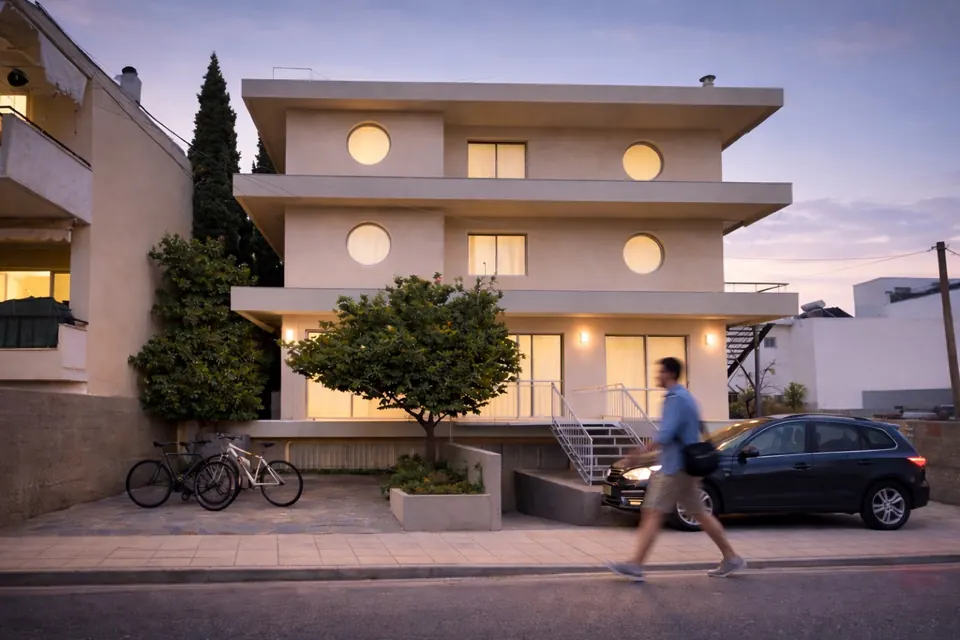
Gerakas · AthensGA-19
Gerakas Residences
A €250,000 Golden Visa conversion in Gerakas — an office turned into homes: compact one-bedrooms from €250,000.
- Beds
- 1 bed
- Energy Class
- —
- Delivery
- 2027

Thessaloniki Centre · ThessalonikiGA-51
Thessaloniki City Centre Twin Lofts
Two lofts in central Thessaloniki being converted from commercial to residential use: about 70 m² each, with a double-height living space and a mezzanine bedroom. Each is Golden Visa eligible at €250,000.
- Beds
- 1 bed
- Energy Class
- A
- Delivery
- Under renovation · date on request

Peristeri · AthensGA-41
Peristeri Residences
A boutique project in Peristeri, a lively district of west Athens, where an older building is being converted into 14 apartments: 32–65 m², mostly two-bedroom, delivered furnished, with a top-floor apartment featuring a private roof terrace. Eligible for the €250,000 Golden Visa, €250,000–292,500.
- Beds
- 1–2 bed
- Energy Class
- —
- Delivery
- 2027