
August 30, 2026 · Updated: October 7, 2026 · Emre Kurt, Lawyer
Is Buying Land Valid for the Greece Golden Visa? (2026)
Is buying land valid for the Greece Golden Visa? Where the land + construction route is practical, and the conditions and risks to watch. 2026 guide.
Although buying land (bare ground) is theoretically a valid investment route for the Greece Golden Visa, in practice it involves far more conditions and restrictions than most investors think. Because the program mainly targets residential real estate investment, buying land alone is not considered sufficient in most cases; it is usually assessed together with a construction project. In this article, we explain under what conditions a land purchase is considered valid for the Golden Visa, in which areas this route is more practical, and the risks to watch, based on the current 2026 legislation.
Why Is Buying Land Usually Not Sufficient on Its Own for the Golden Visa?
The Greece Golden Visa legislation requires the investment to be assessed as "real estate"; however, the fundamental purpose of the program is to encourage the acquisition of a residential asset. For this reason, buying bare land with no structure on it is, in most cases, not considered sufficient on its own. Instead, a land purchase is usually carried out together with a construction contract: the investor both buys the land and undertakes to build a new residence on it. In this case, the total investment amount — land price plus construction cost — must be correctly reflected in the notarial documents and together meet the threshold of the relevant zone (€400,000 or €800,000). Land plus new construction cannot use the €250,000 route; that route applies only to commercial-to-residential conversion and listed/historic building restoration.
In Which Zones Is the Land + Construction Route More Practical?
How feasible the land + construction route is in practice depends largely on the investment threshold of the zone:
| Zone | Threshold | Suitability of the Land + Construction Route |
|---|---|---|
| Zone A | €800,000 | Rarely practical — hard for bare land to reach this amount; a large-scale project is required |
| Zone B | €400,000 | The most commonly used tier — land + construction projects are possible in €400,000 mainland areas (e.g. most of the Peloponnese) |
| Zone C | €250,000 | Not eligible — this tier applies only to commercial-to-residential conversion and listed/historic building restoration; land + new construction does not qualify |
In high-demand areas such as Zone A (like Attica, Thessaloniki, Mykonos, Santorini), it is extremely difficult for bare land to reach a value of €800,000 on its own; therefore, this route is not practical in these areas without a large-scale and costly construction project. By contrast, in the mainland areas where the €400,000 Zone B threshold applies (e.g. most of the Peloponnese), the land + construction combination stands out as a much more realistic and frequently encountered strategy.
Risks and Conditions to Watch
- Land close to the coastline or a border zone may require a separate permit for foreign buyers; such areas are often associated with zones of military or strategic importance.
- The zoning status of the land (building rights, maximum permitted construction area) must be examined as part of title due diligence before the purchase.
- Greece is in the process of transitioning from the traditional land registry system (Ypothikofilakeio) to the digital cadastre system (Ktimatologio); in some areas this transition may not yet be complete, which can make confirming land ownership somewhat more complex.
- The single-property rule that applies in every category and the minimum 120 m² requirement of Zone A and Zone B also apply to the land + construction structure; the structure that results once construction is complete must meet this size requirement.
- The construction process usually takes much longer than buying a standard ready property; therefore, the timing of the Golden Visa application must be carefully coordinated with the construction completion schedule.
- Correct documentation of the construction contract and the payment flow (the land price and construction cost separately) may be requested at the application stage.
For Whom Might Buying Land Make Sense?
The land + construction route may be considered for investors who want to build a custom home to their own design rather than a standard ready property, and who can devote time to the length and complexity of the process. This route attracts some interest, especially in Zone B areas such as most of the Peloponnese, among investors who want to build a bespoke villa on a large plot. However, because the process requires significantly more time, coordination and risk management compared with buying a ready property, most investors prefer the simpler and more predictable ready-property options (second-hand or new build).
Let's take the right step toward your Greece Golden Visa together.
From choosing the right project to the application and residency, we are with you end to end.
Get a Free ConsultationFrequently Asked Questions
1. Can I apply for the Golden Visa by buying only land?
Usually no; buying bare land alone is not sufficient in most cases. Because the Greece Golden Visa program mainly targets residential real estate investment, a land purchase is generally assessed together with a construction contract; the investor both buys the land and undertakes to build a new residence on it. In this case, the total investment amount is calculated as the sum of the land price and the construction cost, and this total must meet the threshold of the relevant zone. An application from an investor who plans to buy only land and build nothing on it is very likely to be rejected.
2. In which zones is the land + construction route more feasible?
This route is a far more feasible strategy in the mainland areas where the €400,000 Zone B threshold applies (e.g. most of the Peloponnese). In high-demand Zone A areas such as Attica, Thessaloniki, Mykonos and Santorini, it is extremely difficult for bare land to reach a value of €800,000 on its own; therefore, in these areas the land + construction route is only possible with a very large-scale and costly project. For this reason, most investors considering a land purchase naturally turn toward Zone B areas.
3. I want to buy land by the coast; is an additional permit required?
Yes, land close to the coastline or a border zone may require a separate permit for foreign buyers. Because such areas are often associated with zones of military or strategic importance, it is important to clarify before purchase whether this permit is required and, if so, whether it can be obtained. This process may require additional time and documents compared with buying standard inland land. Therefore, if land by the coast is being considered, it is advisable to have this permit process investigated at the outset through a lawyer.
4. Is there a size requirement for the house to be built on the land?
Yes, the single-property rule that applies in every category and the minimum 120 m² requirement of Zone A and Zone B also apply to the land + construction structure. When construction is complete, the resulting residence must meet the minimum 120 m² size requirement of its zone. Therefore, it is important that the architectural design of the house to be built on the land is designed from the start to meet this size requirement. The €250,000 Zone C conversion/restoration route has no such size requirement, but land plus new construction cannot use that route.
5. Why is buying land considered riskier than buying a ready property?
The land + construction route involves more uncertainty and time than buying a ready property, because additional steps such as completing the construction process, obtaining permits, and confirming the zoning status are required. Construction delays can also affect the timing of the Golden Visa application. In addition, the fact that Greece is in the process of transitioning from the traditional land registry to the digital cadastre system can make confirming land ownership more complex in some areas. For this reason, investors considering a land purchase are advised to accept from the outset that the process requires more risk management and professional support than a standard property purchase.
Note: The information in this article is based on general legislative knowledge and may vary significantly depending on the project, the zone and the zoning status of the land. To assess together whether buying land is suitable for your situation, the required permits and the construction process, get in touch with us — we are by your side from the beginning to the end of the Golden Visa process.
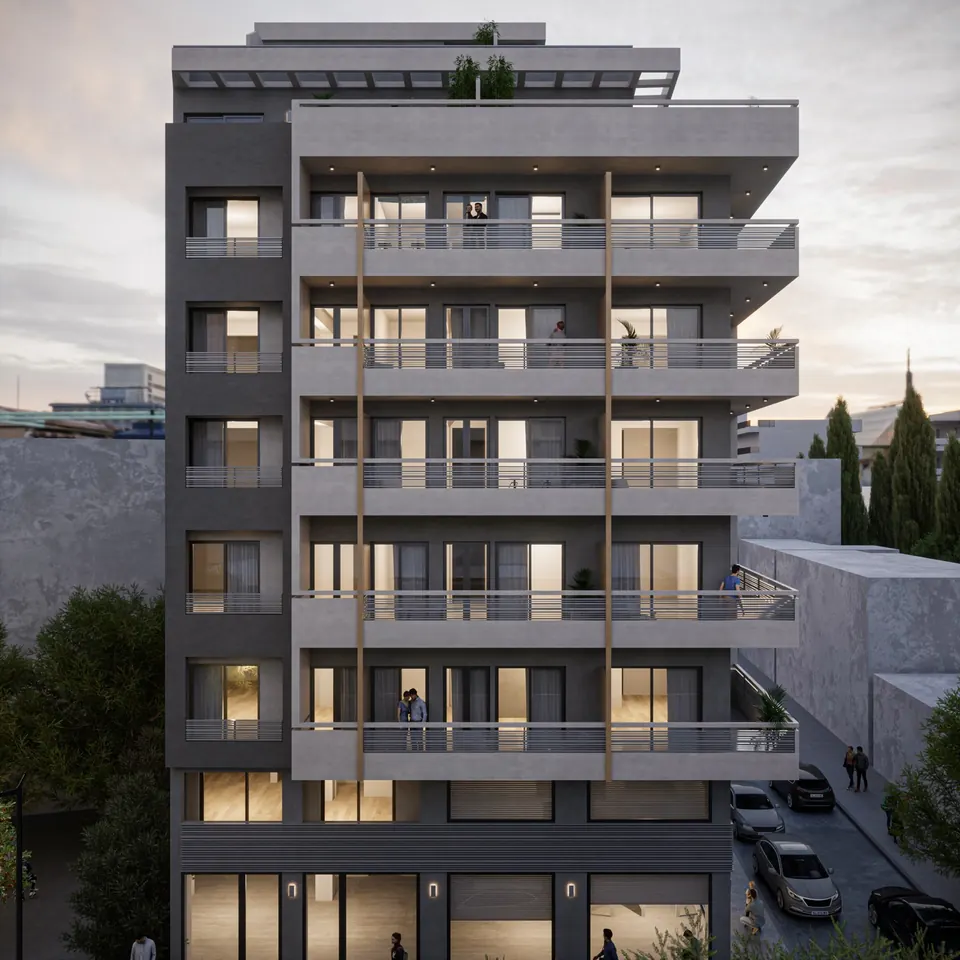 DELIVERY MAR 2027
Larissa Station · AthensGA-02
Larissa Station Residences
A €250,000 Golden Visa conversion beside Larissa Station in central Athens: 21 furnished residences with a gym and shared lounge.
- Beds
- Studio – 3 bed
- Energy Class
- —
- Delivery
- 2027
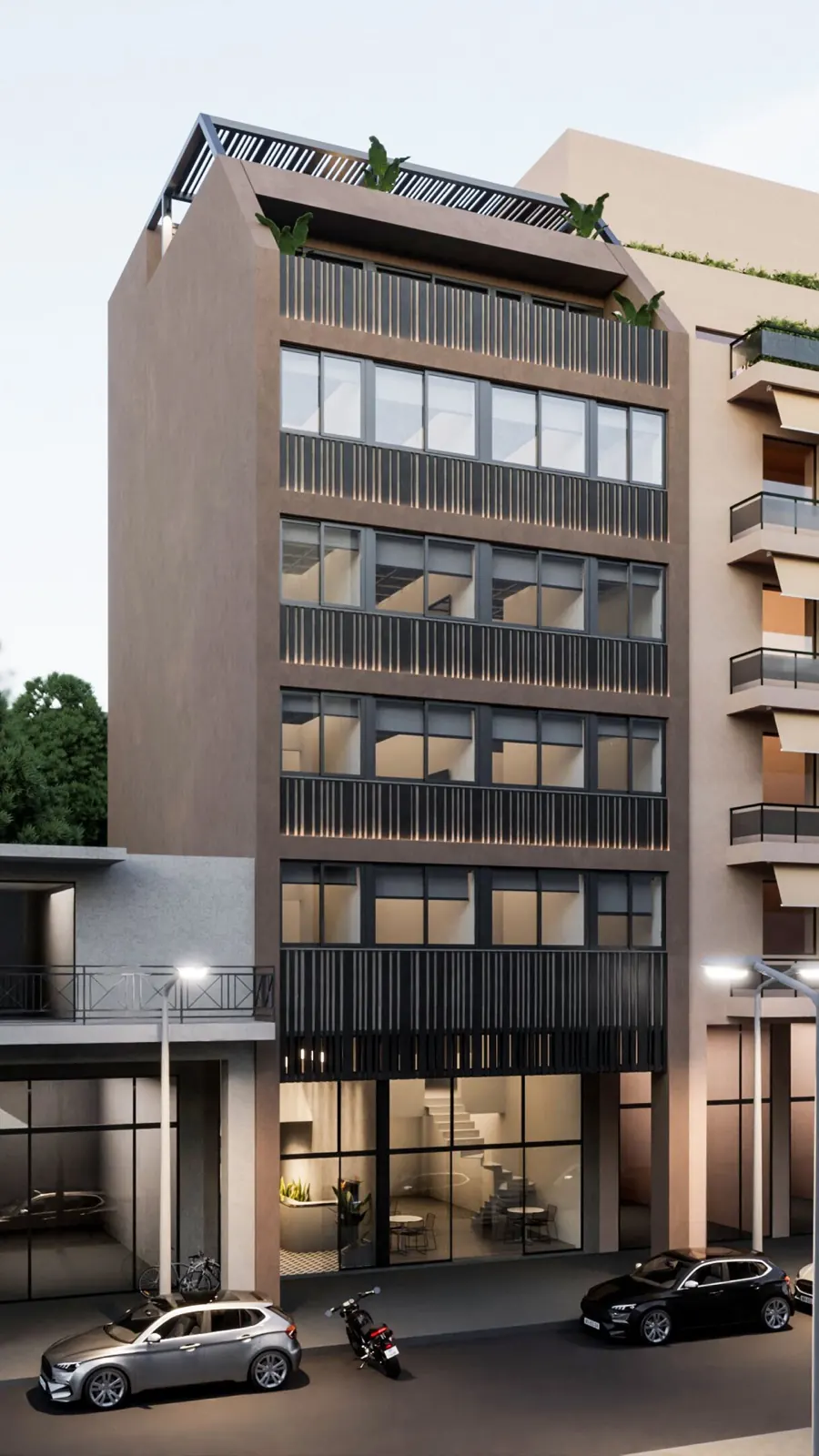 READY TO MOVE IN
Piraeus · AthensGA-04
Piraeus Furnished Apartments
A €250,000 Golden Visa conversion in the port city of Piraeus: ready, fully furnished apartments in a building with smart locks, a reception and a gym. Apartments bought for the Golden Visa can only be let long-term.
- Beds
- 1–2 bed
- Energy Class
- —
- Delivery
- Ready
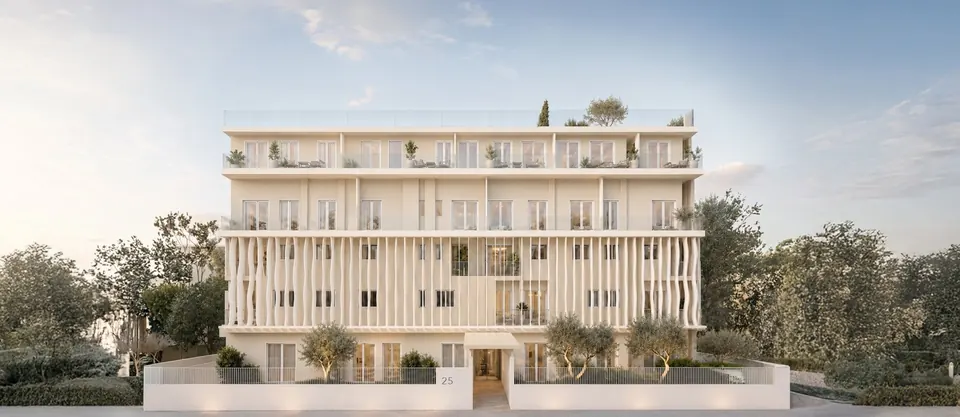
Agios Ioannis Rentis · PiraeusGA-40
Piraeus Garden Residences
A 72-apartment residential complex in Piraeus created by converting a commercial building: a courtyard with a reflecting pool, private garden, outdoor gym and a rooftop terrace with Acropolis and coastline views. 42–81 m², delivered furnished, eligible for the €250,000 Golden Visa.
- Beds
- 1–3 bed
- Energy Class
- —
- Delivery
- 2027